
Monsoon rains have unleashed widespread destruction across India, claiming seven lives in Himachal Pradesh and Karnataka due to landslides and floods, while heavy downpours have disrupted normal life and triggered red alerts in Maharashtra and other regions.

Climate experts explain how El Nino and climate change are intricately linked, with El Nino delaying monsoon onset and climate change intensifying rainfall. This new reality is altering the Indian monsoon's behaviour, leading to short-duration, high-intensity rain spells, especially in western and northwestern regions.

The southwest monsoon has intensified across India, bringing heavy to extremely heavy rainfall and prompting red alerts for several states, alongside concerns over landslides and urban flooding.

The southwest monsoon has advanced across northern Indian states, leading to widespread rainfall, waterlogging, road blockages, and rain-related deaths, particularly in Himachal Pradesh and Rajasthan. The Centre is monitoring the situation, especially concerning potential drought conditions in some areas due to the El Nino effect.

The India Meteorological Department has forecast intensified heavy rains and thunderstorms for Mumbai and its suburbs. A yellow alert has been issued, and high tides are expected, though traffic and public transport are currently normal.

Torrential monsoon rains unleashed widespread destruction across several parts of the country on Thursday, inundating roads, uprooting trees, damaging property and disrupting normal life as authorities scrambled to restore normalcy.

Heavy rainfall has disrupted major pilgrimages in Uttarakhand, including the Kedarnath route and the Kailash-Mansarovar Yatra, prompting the IMD to issue red and orange alerts for extremely heavy rainfall across several districts.

After a subdued start, the southwest monsoon has gathered pace since the beginning of July, narrowing the cumulative rainfall deficit from nearly 30 per cent on June 30 to around 15 per cent as of July 8.

Mumbai has spent four centuries building folklore around its monsoon: The potholes, the delayed trains, the office debates about whether it will 'break' this week or next. It turns out the rain was always a market. Nobody had built the exchange for it until now!

Mumbai and its metropolitan region are experiencing severe monsoon rains, leading to widespread waterlogging, transport disruptions, and the closure of schools and colleges. The India Meteorological Department (IMD) has issued an 'extremely heavy rainfall' alert, with some areas receiving nearly 200 mm of rain in 12 hours, prompting Chief Minister Devendra Fadnavis to urge residents to avoid non-essential travel.

Heavy monsoon rains have severely impacted Mumbai and its surrounding areas, leading to landslides, suspension of train services, and at least 13 fatalities over the past few days. The Mumbai-Pune Expressway was also shut due to a concrete pillar collapse and waterlogging.

The India Meteorological Department (IMD) has predicted below normal monsoon rains for India this year, citing the potential emergence of El Nino conditions. This could significantly impact the country's agriculture-dependent economy.

The Mumbai civic body declared a holiday for schools and colleges in the afternoon session following an India Meteorological Department (IMD) red alert for extremely heavy rainfall. Citizens have been advised to stay indoors unless necessary, as the city continues to experience significant monsoon downpours, with some areas receiving over 100 mm of rain.
With the southwest monsoon stalled over southern Maharashtra, India is facing a nationwide rainfall deficit of 41 percent between June 4 and June 18, according to the latest India meteorological department (IMD) data.

The India Meteorological Department has issued a red alert for Mumbai, Thane, Palghar, and Raigad districts for Saturday and Sunday, forecasting extremely heavy rainfall. Mumbai has already experienced significant rainfall this week, and the alert indicates continued severe weather conditions, potentially disrupting normal life.

Mumbai experienced heavy overnight monsoon rains, with some areas receiving over 200 mm in 24 hours, leading to widespread waterlogging, traffic congestion, and disruptions in suburban train services, particularly on Central Railway lines due to a track cave-in.

Heavy rains and thunder returned to Mumbai, causing significant delays in local and long-distance train services, particularly affecting routes towards Gujarat and Pune. Two key reservoirs, Tulsi and Vihar lakes, have begun overflowing, though the city's overall water stock remains at 41.43 per cent.

Mumbai and Pune are grappling with severe monsoon weather, triggering an 'orange' alert, widespread disruptions, school closures, and tragic fatalities from landslides and wall collapses.

The India Meteorological Department has issued a red alert for Mumbai, forecasting extremely heavy rainfall and gusty winds over the weekend. The city has already experienced over 100 mm of rain in the last 24 hours, leading to delays in local train services, though public transport remains operational.

The IMD is predicting close to a 60% probability of deficient rainfall, which means there is a strong possibility that the monsoon this year will be poor.

"Rather than worrying, preparation is required. Contingency plans will be made for affected districts and crop changes will be considered wherever necessary"

Heavy rainfall has caused severe waterlogging across Mumbai, disrupting traffic and daily life. The India Meteorological Department issued a red alert for Mumbai and surrounding districts, advising precautions. Specific areas recorded over 200 mm of rainfall, and the IMD forecasts continued heavy rains for the Konkan region, Goa, South Gujarat, Odisha, and Central India.

The southwest monsoon has officially set over Kerala, albeit delayed from its typical June 1 start. The India Meteorological Department (IMD) forecasts below-normal rainfall for the season, expecting around 90% of the long-period average, primarily due to the emerging El Nino conditions.

A poor monsoon could drag overall economic growth and compound the impact of the West Asia conflict on the Indian economy.

'Monsoon is the pran (life) of our water system.' 'A weak monsoon will have a very negative impact on crops and people's lives.'

Heavy monsoon rains have caused widespread havoc across Arunachal Pradesh, leading to floods, landslides, and significant damage to infrastructure. Rescue operations are underway in multiple districts, with casualties reported and many displaced. Connectivity remains severely disrupted, and authorities have issued warnings as more heavy rainfall is forecast.

Most north Indian states reported below-normal temperatures on Monday, with rain and thunderstorms lashing parts of Uttar Pradesh, Rajasthan, and Himachal Pradesh. The southwest monsoon is expected to arrive in Kerala in the next two to three days.
Mumbai is experiencing intense monsoon activity, with over 100 mm of rainfall recorded in 24 hours, leading to widespread waterlogging and two tragic rain-related deaths, as the India Meteorological Department forecasts continued heavy to very heavy showers and gusty winds.

Dilip Buildcon Ltd, the contractor for the Anakkampoyil-Kalladi-Meppadi road tunnel project in Wayanad, attributed a recent fatal landslide to exceptionally heavy rainfall. The company stated that the project adheres to all safety and environmental protocols, despite allegations from Kerala Ministers of a "man-made disaster."
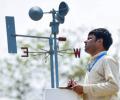
'This system will be of immense help in agricultural planning, disaster management and water resources management.'

Kerala's Wayanad district is under a red alert due to very heavy rainfall and a landslide at the Kalladi tunnel project site, resulting in one confirmed death, seven hospitalised, and seven missing. Neighbouring Kozhikode is also under a red alert, with orange alerts for other districts. Evacuation efforts are underway, and the landslide pushed a bus into a river.

The India Meteorological Department forecasts the southwest monsoon to arrive in Kerala in the next two to three days, slightly delayed from the typical June 1 start. The department also predicts below-normal rainfall for the season due to emerging El Nino conditions.

India's consumption stocks, which have outperformed the broader market, are now facing significant pressure due to a gradual rise in fuel prices and the potential for higher inflation. Analysts warn that companies may be forced to pass on increased input costs to consumers, potentially hurting demand across both staples and discretionary categories, with a looming threat of deficient monsoon rainfall further exacerbating inflationary concerns.

The India Meteorological Department (IMD) has forecasted an early onset of the southwest monsoon over Kerala, expected around May 26. This marks the beginning of the crucial rainy season for India.

The India Meteorological Department has issued a 'red' alert for Mumbai, Thane, and Raigad districts, forecasting heavy to very heavy rainfall and strong winds. Residents are advised to avoid unnecessary travel, and warnings include potential flash floods, structural damage, and disruptions to essential services. The Brihanmumbai Municipal Corporation has also urged caution and deployed officials to monitor the situation.

Thousands of protesters, including children, students, and the elderly, gathered in central Delhi for the Cockroach Janta Party's 'Chalo Sansad' march towards Parliament. The protest, coinciding with the Monsoon Session, led to clashes with police, who used tear gas and lathi-charge, resulting in injuries to both sides and suspension of internet services. Despite police action and barricades, protesters repeatedly attempted to reach Parliament, leading to a day-long standoff.

The India Meteorological Department (IMD) has issued an orange alert for Mumbai, predicting heavy to very heavy rainfall, thunderstorms, lightning, and gusty winds for the next few days. The forecast extends through Friday, with a brief yellow alert on Tuesday. Neighbouring Palghar is under a red alert, and Raigad is under an orange alert for five days.

Several districts in Uttar Pradesh experienced rainfall, with Kanpur City recording the highest precipitation. The India Meteorological Department reported a drop in temperatures across the state, including Lucknow, and issued a forecast for continued rain in western UP.

The monthly average rainfall over India is expected to be below normal during July, the India Meteorological Department said on Tuesday in its monthly forecast.

The weather office has warned that the prevailing monsoon conditions could trigger flash floods, landslides, waterlogging and a further rise in river levels across the Northeast.
